Feminism entails a belief in the equality of all genders
Feminism is also about Power
Intersectionality
Intersectionality is a metaphor for understanding the ways that multiple forms of inequality or disadvantage sometimes compound themselves and create obstacles that often are not understood among conventional ways of thinking (Crenshaw, K.W., 1989)
Intersectional feminism is not only about women or even only about gender. It is about power who Has it and who Does Not
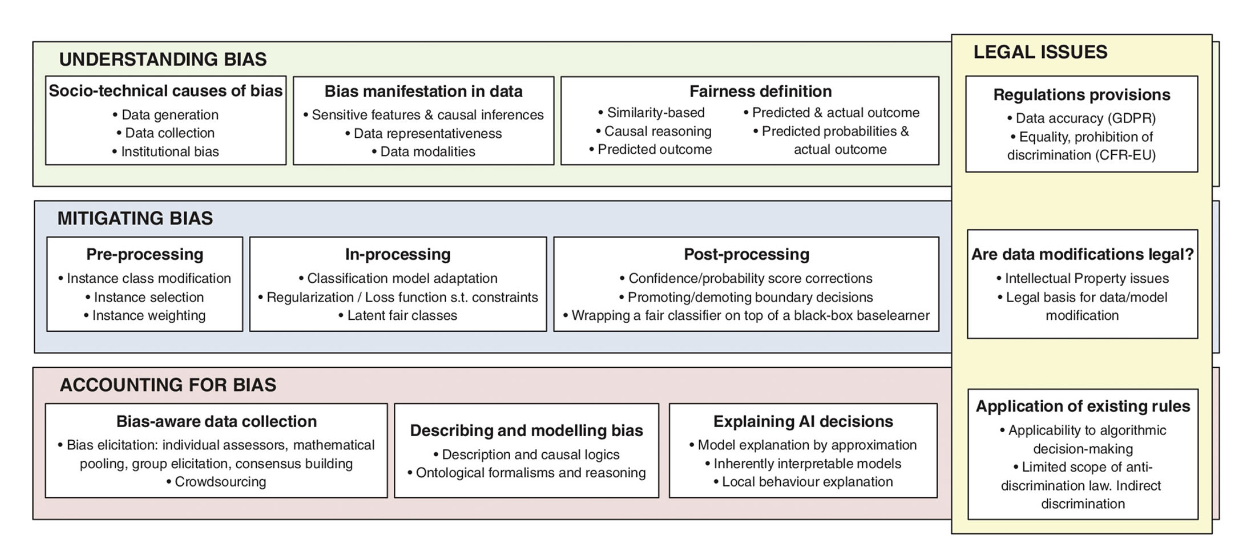
Algorithmic Confounding/Biasness
Fighting Bias in Algorithms
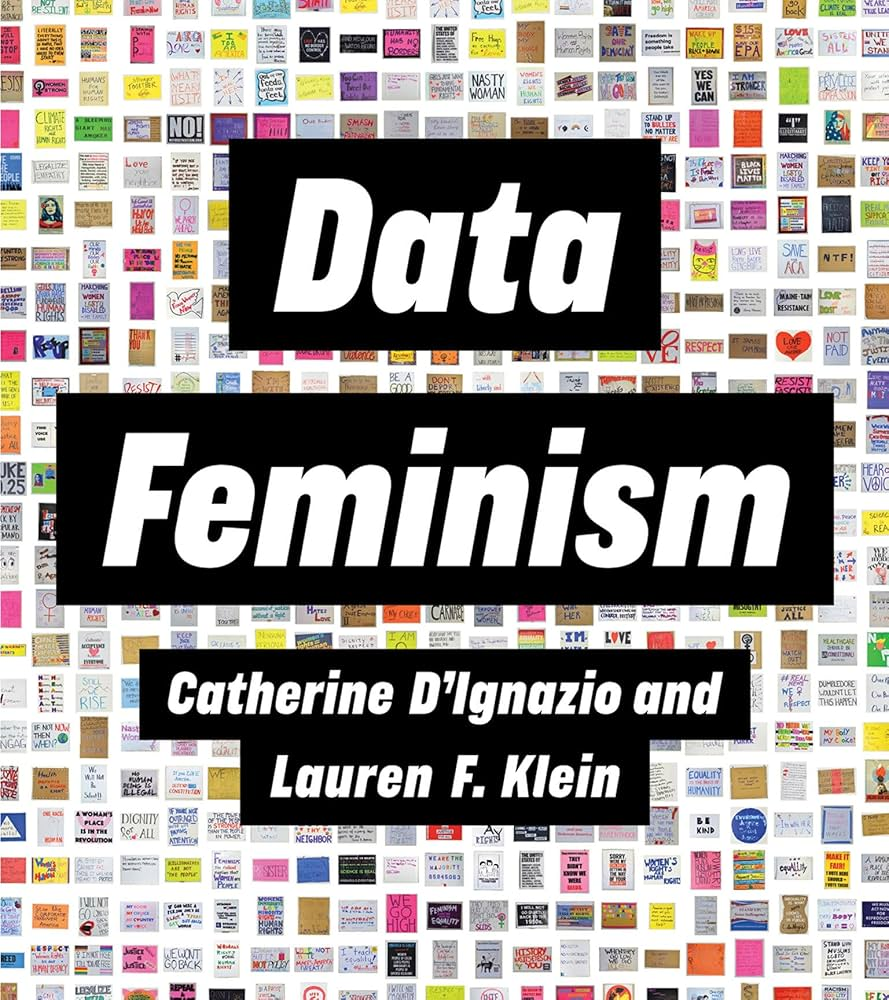
What is Data Feminism?
Data Feminism is a framework and approach to data science that applies feminist and intersectionality approaches to the analysis and interpretation of data
It critiques traditional data practices that often reinforce existing power structures, inequalities, and biases, and instead advocates for more equitable, inclusive, and socially just ways of working with data
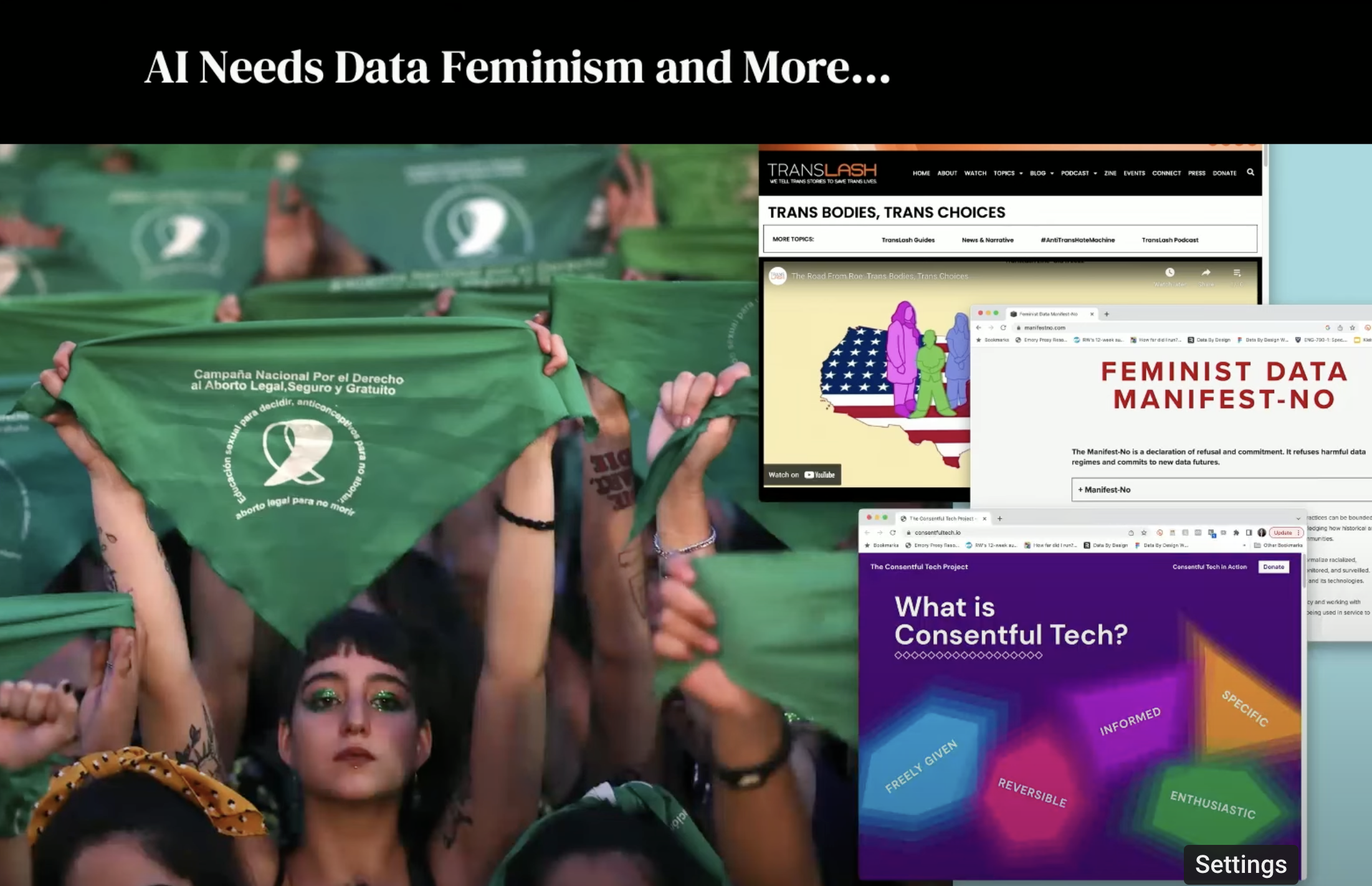
Data Feminism for AI
7 Principles of Data Feminism (Klein & D’Ignazio, 2024)
Principle 1: Examine Power: Analyzing how power operates in the world
Example: Facial Recognition Bias
Principle 2: Challenge Power: Challenging power and working towards justice
Example: Gender Data Gap in Medicine
Data Feminism for AI (Cont.)
Principle 3: Rethink Binaries and Hierarchies: Data feminism requires us to challenge the gender binary, along with other systems of counting and classification that perpetuate oppression.
Example: Non-Binary Gender Categories in Surveys
Principle 4: Elevate Emotion and Embodiment: Data feminism teaches us to value multiple forms of knowledge, including the knowledge that comes from people as living, feeling bodies in the world.
Example: Indigenous Data Sovereignty
Data Feminism for AI (Cont.)
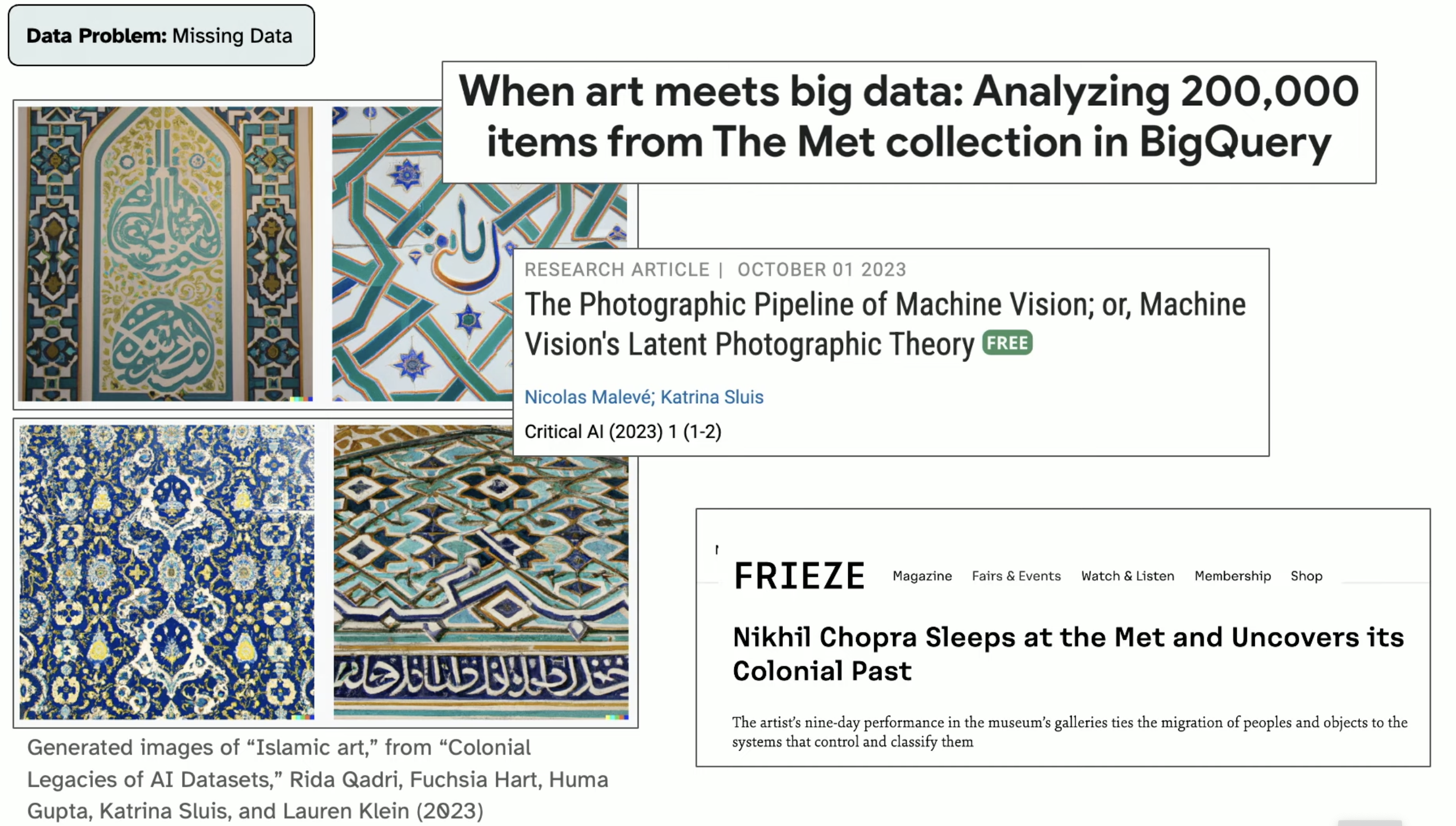
Principle 5: Embrace Pluralism: Data feminism insists that the most complete knowledge comes from synthesizing multiple perspectives, with priority given to local, Indigenous, and experiential ways of knowing.
Example: Community-Based AI Models for Language Preservation
Principle 6: Consider Context: Data feminism asserts that data are not neutral or objective. They are the products of unequal social relations, and this context is essential for conducting accurate, ethical analysis.
Example: Predictive Policing Risks
Data Feminism for AI (Cont.)
Principle 7: Make Labor Visible: The work of data science, like all work in the world, is the work of many hands. Data feminism makes this labor visible so that it can be recognized and valued.