Current Research Themes
Knowledge infrastructure is only visible when it fails. Metadata errors erase scholarship. Computational tools locked behind programming expertise exclude entire professional communities. My research sits at the intersection of computational methods and information infrastructure, studying how knowledge gets organized, and accessed.
My research addresses three connected areas:
Accessible and Accountable Research Tools
Powerful methods are of limited use when researchers cannot access them or inspect how they work. I ask how tools can support people with different levels of technical experience while keeping researchers involved in consequential decisions. OpenCoder, an AI assisted open tool for qualitative research in development, is part of this work, alongside my earlier work on Coconut Libtool.
Data Documentation and Responsible Reuse
Data can travel far beyond the project in which it was created. Without clear documentation, later users may miss how it was collected, categorized, or intended to be used. My work on data documentation asks what researchers need to know about a dataset to interpret and reuse it responsibly. Additionally, I examine where metadata, open datasets, and classification systems introduce errors or encode inequities that affect the communities they describe. This theme also connects to my research on data quality, metadata, and the representation of people in information systems.
Computational Methods for Studying Knowledge
NLP and machine learning can reveal patterns across collections that would be difficult to trace by reading individual documents alone. I use and evaluate these methods to study how scholarly and cultural knowledge is produced and connected across fields. I am equally interested in how a method’s assumptions affect the patterns it produces, so that findings can be interpreted in context.
Software and Data
Authors: M. Lamba and F.A. Santosa
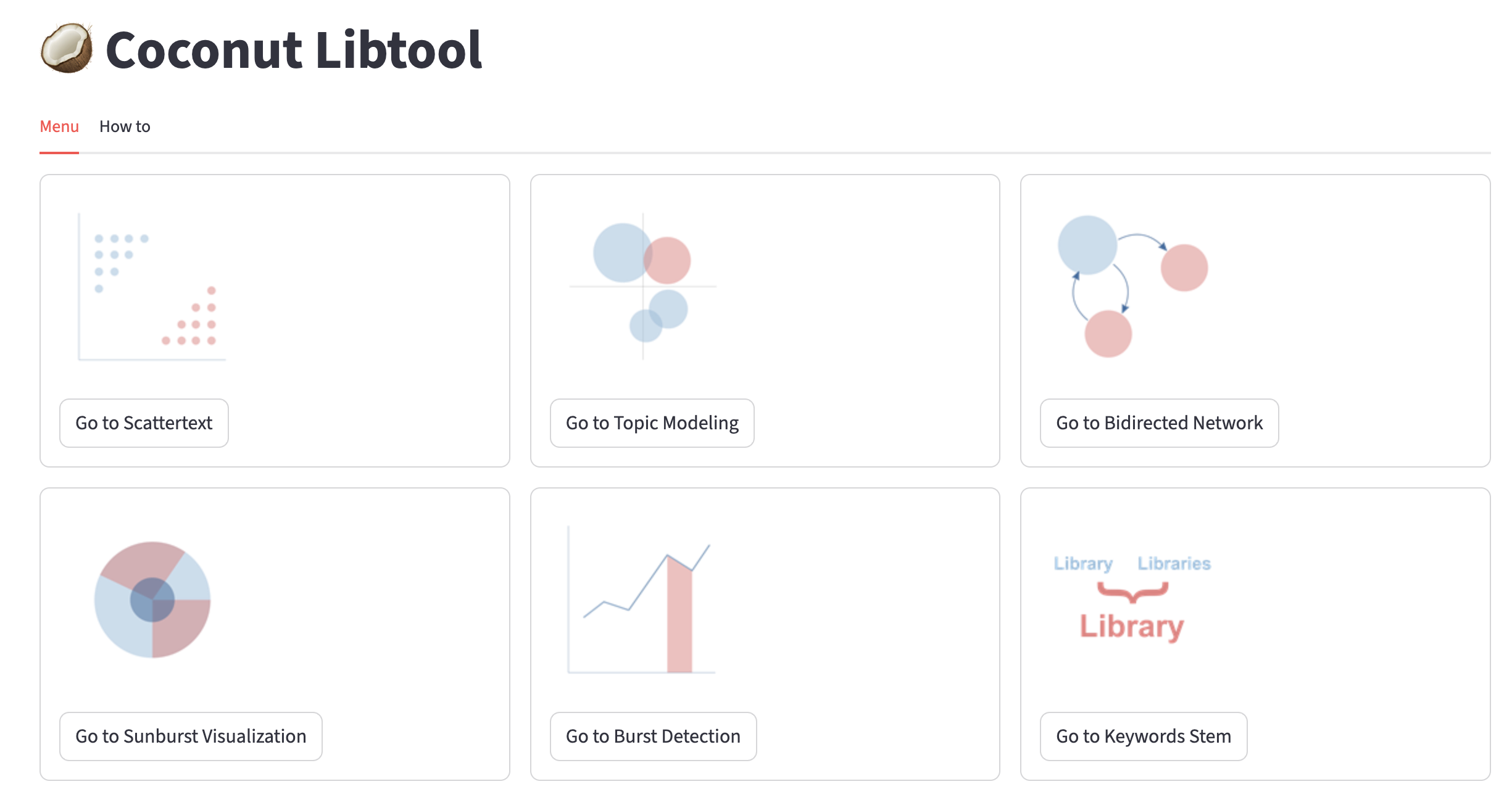
Coconut Libtool
Textual analysis remains challenging for researchers, students and practitioners without programming expertise, creating barriers in social sciences and humanities research. To overcome that barrier, we developed Coconut Libtool, a web-based application that makes advanced textual analysis and visualization accessible to everyone.
Authors: M. Lamba, Y. Peng, S. Nikolov, and J. S. Downie
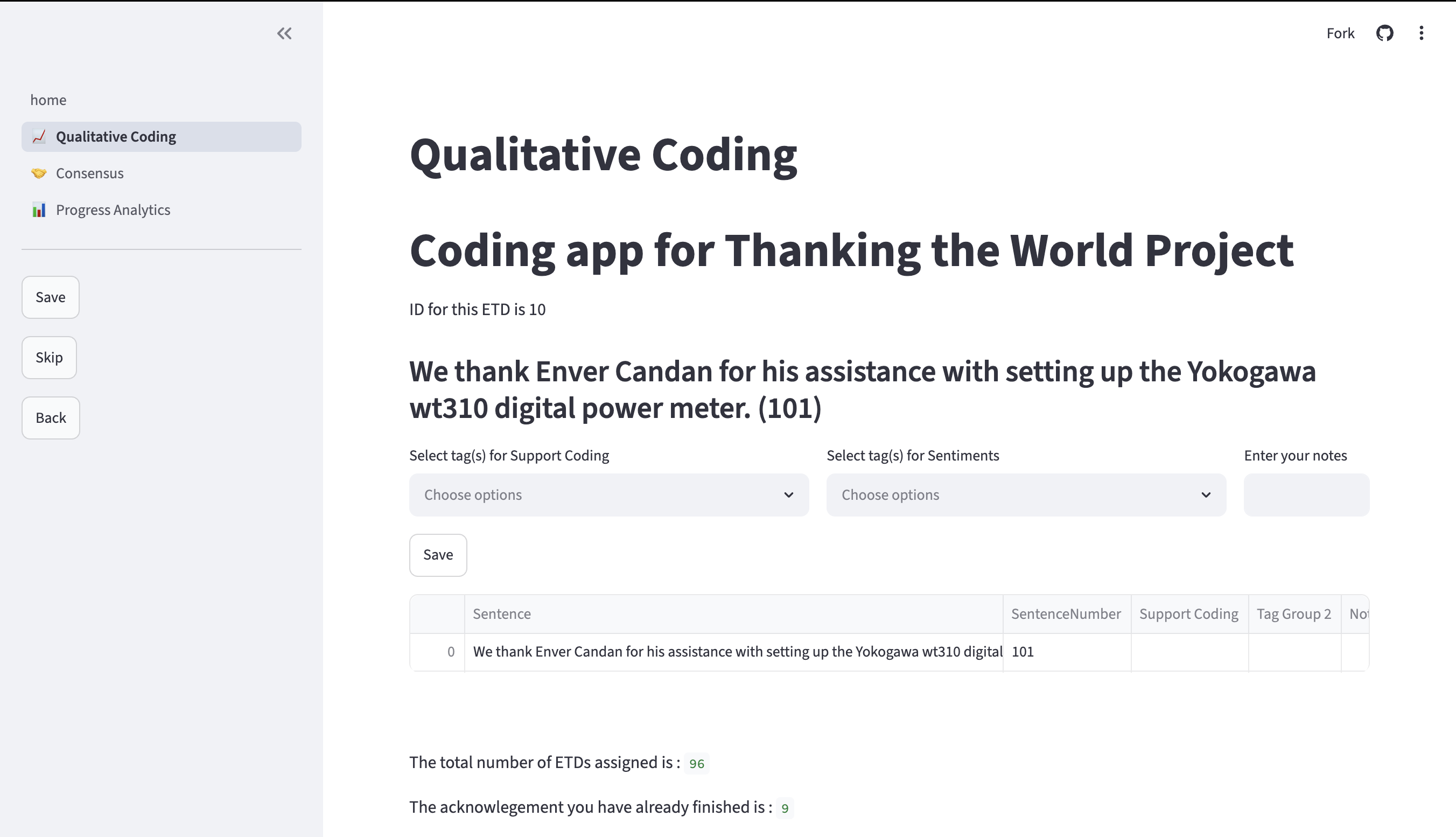
Human Annotated Acknowledgment Dataset
Acknowledgments are the most overlooked part of a scientific publication that is often taken for granted.Examining the acknowledgment sections of dissertations is crucial for understanding the cultural aspects embedded within academic practices and their impact on wider societal values and norms. We introduce an ongoing project involving a manually coded dataset consisting of acknowledgment sentences derived from dissertations sourced from the institutional repository of the University of Illinois Urbana-Champaign.

Improve Parsing of ETDs
Creating approaches for parsing author, advisor and degree metadata from electronic theses and dissertations (ETDs), recognising the distinct challenges and opportunities presented by this important type of scholarly output.
Authors: C. Barnett, M. FitzGerald, K. Krumbholz, and M. Lamba (Equal Contribution)
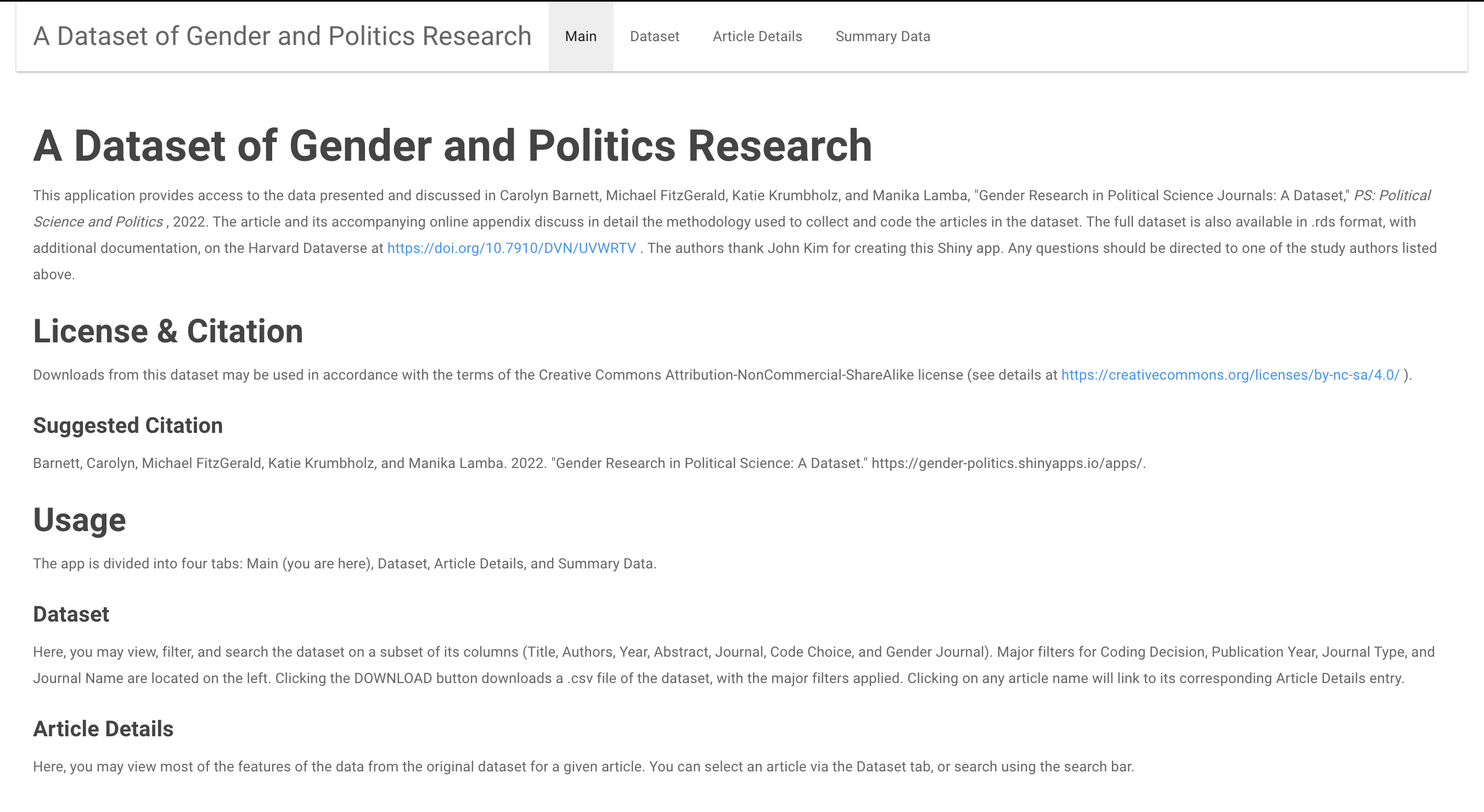
Gender and Politics Research
This application provides access to the data presented and discussed in Carolyn Barnett, Michael FitzGerald, Katie Krumbholz, and Manika Lamba, “Gender Research in Political Science Journals: A Dataset,” PS: Political Science and Politics, 2022.